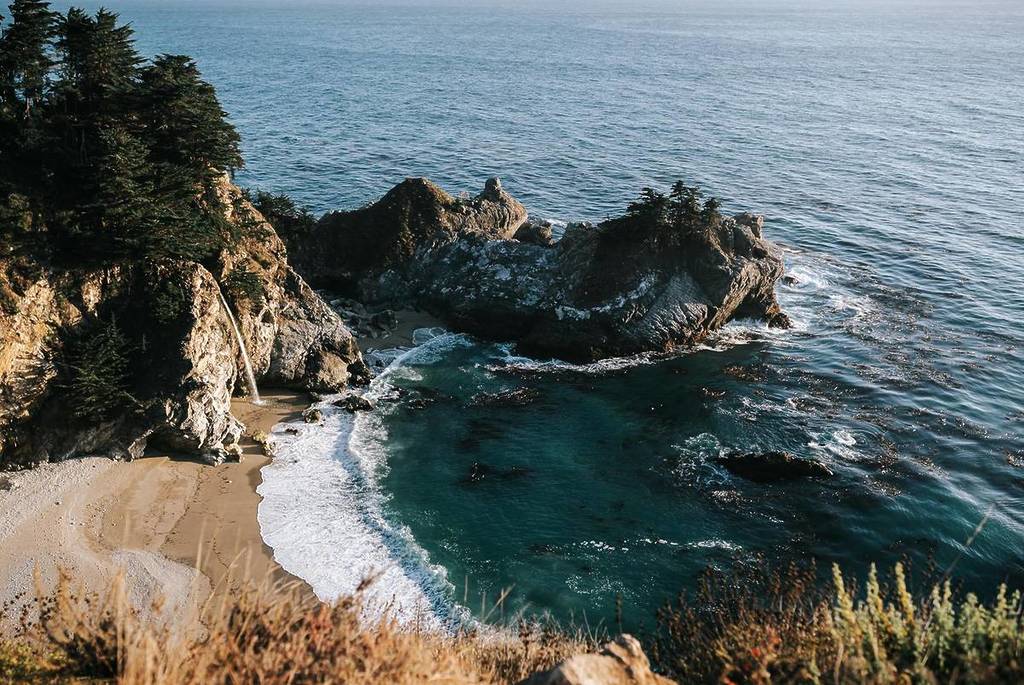

Did you know that out of the more than 7,800 documented waterfalls scattered across the globe, there is a highly exclusive club of 31 widely recognized tidefalls? What makes them so special, you wonder? A tidefall is a rare geographical phenomenon where a waterfall empties directly into the open ocean – not in a river or lake. And here’s a fun fact: California is the proud home to 2 of these natural wonders.
Why are tidefalls so rare?
Basically, their existence requires a perfect storm of geological conditions. You need steep coastal cliffs that plunge directly into the sea, paired with an inland water source that flows right to the edge. Usually, over thousands of years, flowing water carves a gradual slope or a river delta down to the ocean. Ocean waves also actively work to erode the cliff drops. Because nature naturally works to smooth out these sudden drops, finding an active tidefall is a unique geographical treat.
California is home to 2 wonderful tidefalls
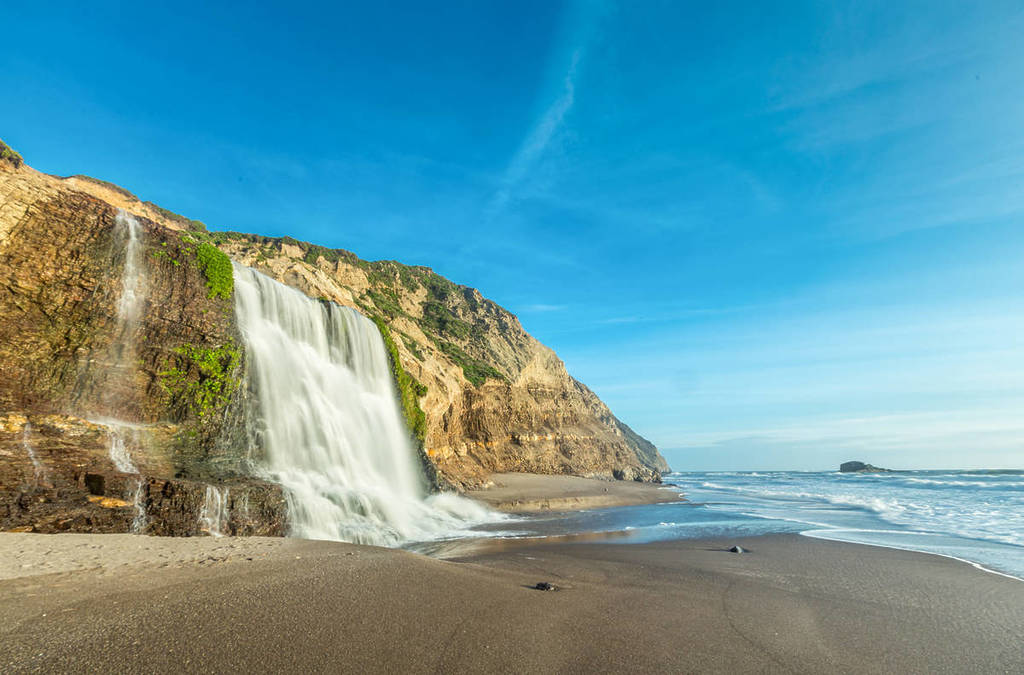
These tidefalls offer a completely different experience for nature lovers.
- McWay Falls: located in Big Sur, this 80-foot waterfall is arguably the most photographed coastal waterfall in North America. Pouring from a lush cliffside into a cove, it’s a picture-perfect sight viewable from an overlook trail. Currently, it mostly falls onto a sandy beach formed by a 1983 landslide – but during high tide, it meets the Pacific waves.
- Alamere Falls: situated in Point Reyes National Seashore just north of San Francisco, Alamere is a 40-foot cascade that tumbles down a shale cliff directly onto Wildcat Beach. Unlike McWay, you can walk right up to its base, but getting there requires a 13-mile round-trip hike through beautiful coastal wilderness.
How to reach the tidefalls from San Diego
If you’re starting in San Diego, visiting these falls makes for an unforgettable California road trip. Perfect for the summer!
- To McWay Falls: Drive north on I-5 N and transition to US-101 N. Near San Luis Obispo, hop onto the scenic Highway 1 N and take it straight up the coast into Big Sur. The drive takes about 7 to 8 hours.
- To Alamere Falls: Take I-5 N to reach the San Francisco Bay Area, then cross the Golden Gate Bridge into Marin County. Head toward the coastal town of Bolinas to reach the Palomarin Trailhead. This drive takes roughly 9 to 10 hours from San Diego, so it’s better suited for a weekend away.