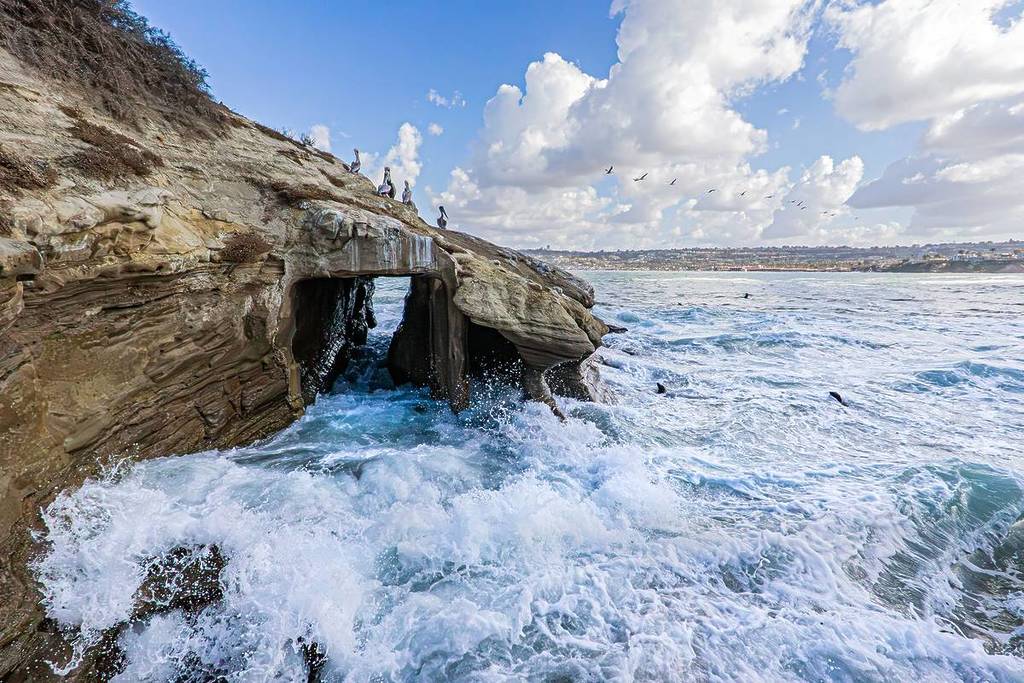
To many San Diegans, the most wonderful time of the year is coming…and no, we’re not talking about Christmas. It’s King Tides time! The next one will occur on November 6, right after the Beaver Supermoon. Below, we take a look at this fascinating phenomenon: the good, the science, and the ugly.
What’s a King Tide?
King Tides are known for being higher or lower than usual. When higher, they’re spectacular to watch, though they can flood low-lying coastal areas. During such circumstances, the area that is most commonly impacted is Ocean Beach. But the real danger comes when large surf coincides with these extra high tides. This seems to happen more and more frequently due to climate change. We’ve just experienced winter coastal flooding in 2023 and 2024.
When low King Tides, you can peek under the water’s surface and observe the marine life. It’s pretty much a must-do family activity in San Diego.
What causes King Tides – and how do they work?
A King Tide happens when the earth, sun, and moon are in full alignment – they’re always during a full moon.
On November 5, 2025, San Diego’s sky will shine bright with the Beaver Supermoon. This full moon is extra special, as it’s the closest one this year, at just 221,817 miles from Earth.
Each King Tide occurs over a 24-hour period. Within that time, there will be 2 high tides and 2 low tides. At least one of the cycles will be during daylight, so that you can experience it.
Where to watch the high tides
While nature’s putting on a show, don’t forget to stay safe! The water can even reach pedestrian areas sometimes. Head to Sunset Cliffs or to the San Elijo State Beach for a secure and wonderful experience.
Where to watch the low tides
There are many spots in and around San Diego where you can check out the low tides. Torrey Pines is always a popular choice, as you can walk very close to the pools. La Jolla is another great spot. Don’t forget – watch, don’t touch! Always respect all marine life.