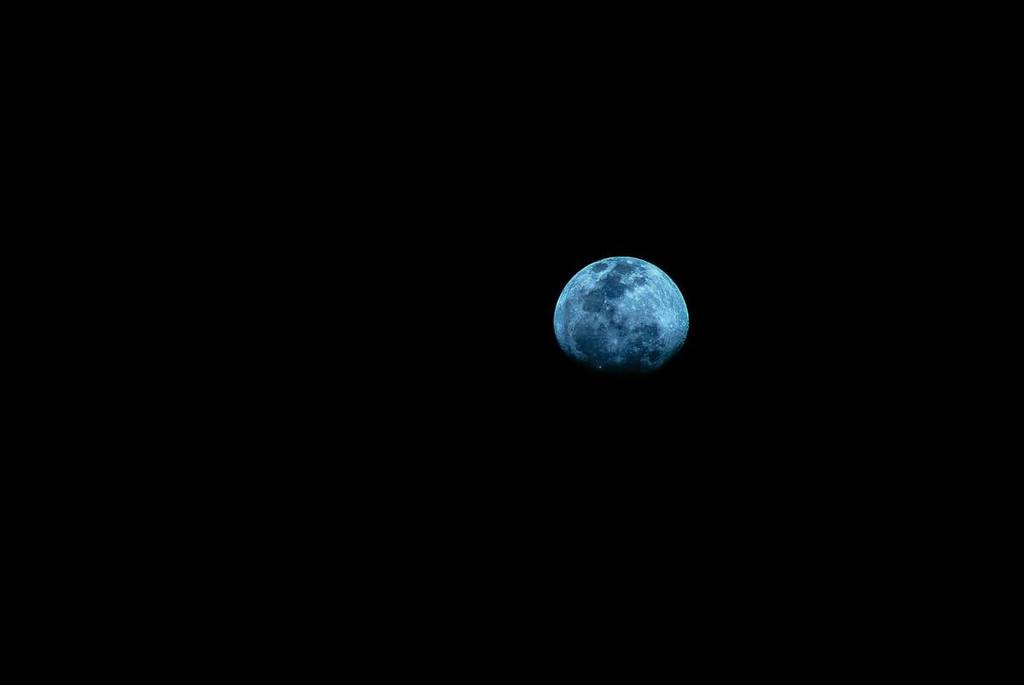

As the month draws to a close, San Diego skywatchers are in for a rare astronomical treat! This month has the unique distinction of being the only month this year to host 2 full moons. The month opened with the Full Flower Moon on May 1st, and it will close out with a spectacular Blue Micromoon, peaking on the morning of May 31st.
Why are these 2 moons in May?
Because a complete lunar cycle takes roughly 29.5 days, the phases of the moon do not perfectly align with our modern calendar months. Most months only see 1 full moon, but occasionally, a month is long enough to squeeze in 2 – and that’s the case this May.
In modern folklore, the second full moon in a single calendar month is popularly known as a “Blue Moon.” It’s been nearly 3 years since the last Blue Moon (August 2024), making this a highly anticipated event.
What’s a micromoon?
This isn’t just a full moon and it isn’t just a Blue Moon; but also a micromoon. The moon does not orbit the Earth in a perfect circle. This means there are times when the moon is closer to Earth (perigee) and times when it’s farther away (apogee).
A full micromoon can appear about 13% smaller and up to 7% dimmer than a supermoon. While this slight reduction in size and brightness is usually too subtle to notice with the naked eye, the moon will still be a breathtaking sight.
Peak time to catch the Blue Moon in San Diego
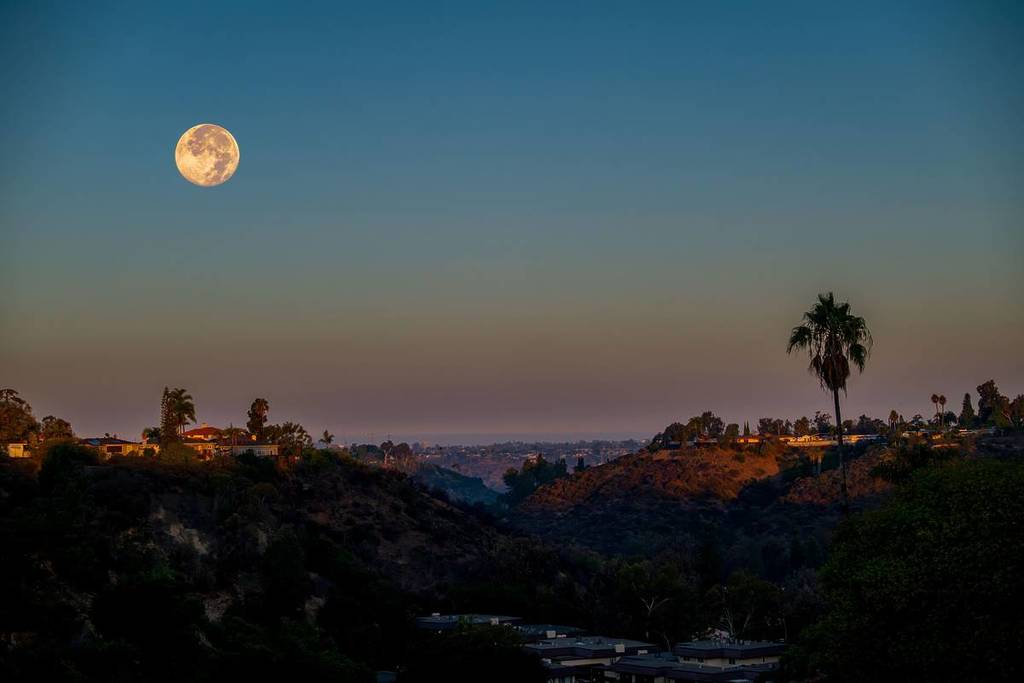
For San Diegans, the Blue Moon will reach its absolute peak illumination at 1:45 A.M. PDT on Sunday, May 31, 2026.
However, you don’t need to stay up that late to enjoy the show. The moon will appear beautifully full to the naked eye as it rises in the east after sunset on Saturday, May 30, and as it sets in the west just before sunrise on Sunday, May 31.
Best spots to watch the show
- Anza-Borrego Desert State Park: This International Dark Sky Park offers an unparalleled, light-pollution-free environment. The micromoon will look exceptionally crisp and bright here.
- Mount Soledad National Veterans Memorial: With 360-degree panoramic views of the entire city and the coastline, this is arguably the best spot to watch the show.
- Sunset Cliffs Natural Park: If you’re an early riser on May 31st, head here to watch the full moon sink into the ocean before dawn.
- Torrey Pines State Beach: Away from the city lights, this open stretch of beach provides a beautifully dark backdrop.