Let’s be honest – it’s hard to pick the best time in San Diego. With amazing Christmassy events, summers full of festivals, falls that we call ‘local summer’…it’s always a great time in America’s Finest City. But one thing’s for sure: King Tides & whale watching season is absolutely fantastic. And guess what? It’s happening right now.
King Tides: what are they, predicted dates, and best spots to catch them
Let’s start from the beginning – what are King Tides, actually? They’re the highest high and lowest low tides of the year. While the first major event of 2026 already occurred between January 1–3, another set of extreme tides is expected to return soon.
Predicted upcoming dates:
- Watch for extreme fluctuations around January 30 – February 2, 2026. These dates are coinciding with the next full moon cycle!
What to expect:
- High tides can reach over 7.0 ft. Keep in mind that when this happens, they can occasionally flood low-lying areas like La Jolla Shores or the Embarcadero.
- On the other hands, the “minus tides” (as low as -2.0 ft) will expose reefs and tide pools that are usually underwater. These are fantastic to observe, and kids love them – don’t forget to be respectful to nature.
Best spots for low tides:
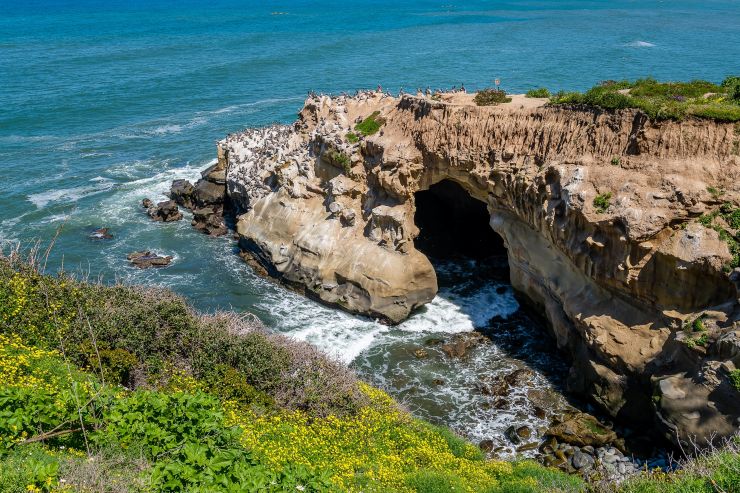
- La Jolla Cove & Caves: Perfect for spotting crabs and – if you’re lucky – an octopus.
- Cabrillo National Monument: Arguably the best tide pools around. Try to arrive at least 60 minutes before the “low tide” mark.
- Cardiff State Beach: The “Table Tops” reef becomes a massive walking platform during King Tides.
How to observe high tides safely:
High tides are beautiful to explore, but don’t forget that they can be very unpredictable, and even dangerous. Keep your eyes on the ocean, stay away from edges, watch for slippery rocks, and never drive through standing water.
Whale watching: what to look out for, where to spot them, and the 2026 timeline
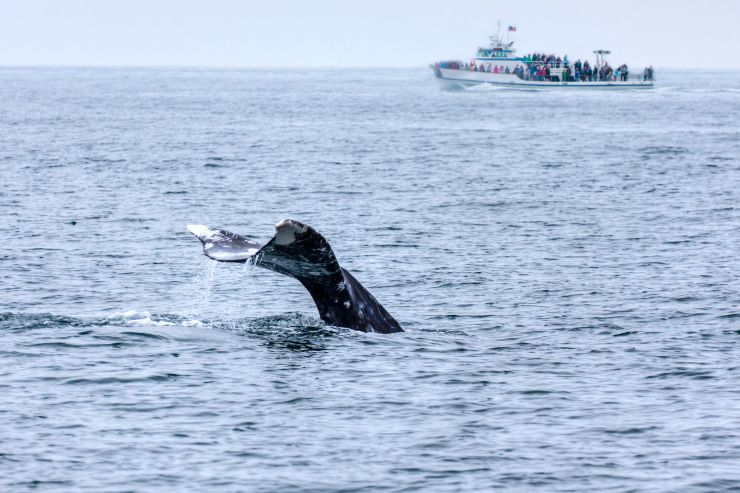
Unlike Blue Whales or Humpbacks, Gray Whales are coastal specialists. They are the only whales that have evolved to feed in shallow water.
When it comes to the whale migration, we’re pretty blessed here. San Diego sits at a strategic bend in the coastline. As the whales travel from the Chukchi Sea in Alaska to the lagoons of Baja, they basically use our landmarks to navigate.
The 2 main trips:
- Between now and end of February, we’re seeing ‘the Southband sprint’ – the pregnant females and males moving fast to get to the warm lagoons of Mexico. On this trip, they pass right by the Point Loma Kelp Beds.
- Between March and May, we’re looking at ‘the Northbound stroll’. Once the calves are born in Baja, they head back North. Mothers stay close to the shore, to protect the babes from orcas. Windansea and Del Mar are great spots to observe this wonderful return trip.
Best spots to see the Gray Whales:
- The La Jolla Submarine Canyon: Here, the ocean floor drops off into a massive deep-water canyon. Whales often use the edges of this canyon to navigate. If you’re kayaking out of the shores, you’ll be right on their way.
- The Point Loma “Choke Point”: This spot forces whales to turn the corner, hence why the Cabrillo National Monument is perfect for land-based watching. Basically, the whales literally have to swim around you.
- Torrey Pines State Reserve: From the Razor Point or Yucca Point overlooks, you can see the “blows” for miles in either direction.
2026 timeline:
- January: The highest number of whales passing per hour. Get out there and explore…like now!
- February: You’ll see some stragglers heading south and the first “early bird” males heading back north.
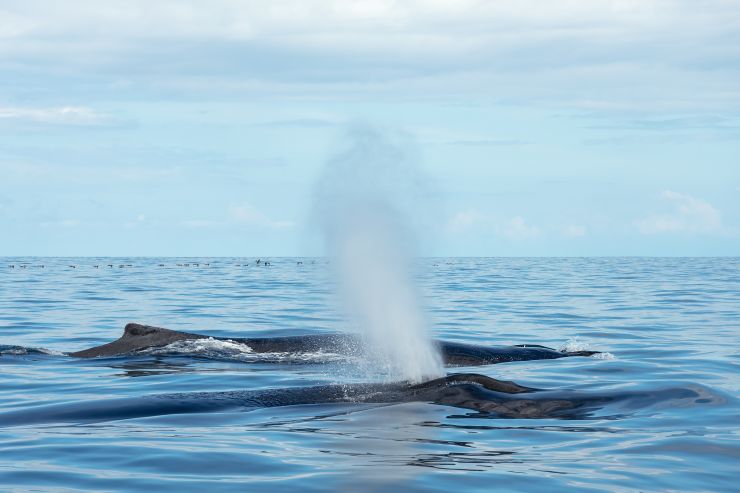
- March: The mom and baby show! Keep your eyes peeled for the “double blow”: one large spout followed immediately by a tiny one.
That’s a wrap -on King Tides & whale watching! Enjoy some of the most magical months in beautiful San Diego.