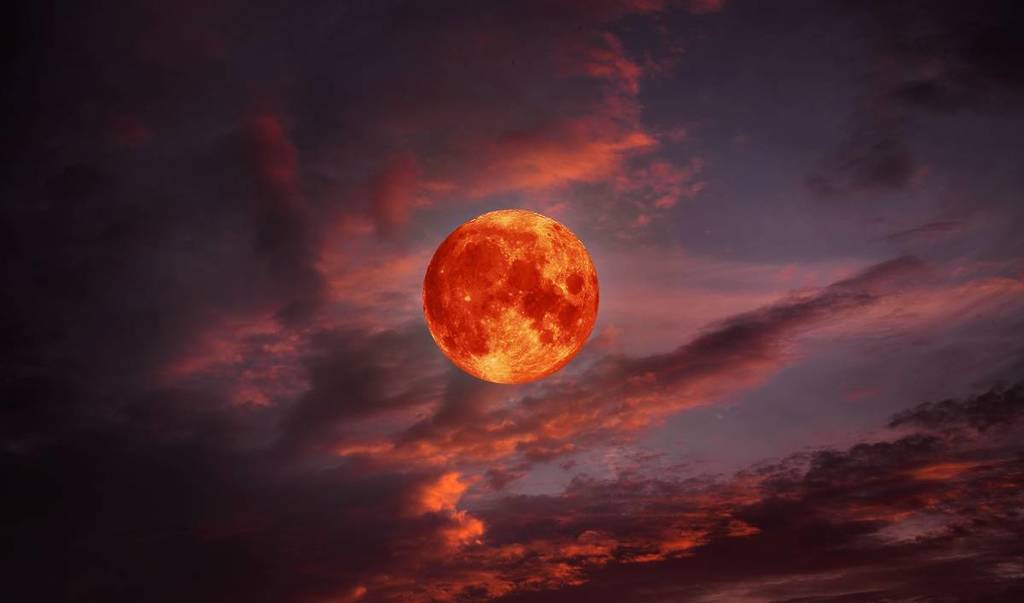
If you’ve been looking for an excuse to stay up late (or wake up incredibly early), we have a spectacular one for you. In the early morning hours of Tuesday, March 3, a total lunar eclipse – famously known as a ‘Blood Moon’ – will grace our SoCal skies. For stargazers, this is one of the coolest events of the year.
Why does the moon turn red?
As the Earth aligns perfectly between the sun and the full moon, our planet casts a shadow over the lunar surface. But instead of going completely dark, the moon takes on a gorgeous reddish-orange glow. This happens because the sunlight reaching the moon passes through Earth’s atmosphere, which scatters the blue light and lets the red wavelengths pass through. It’s basically the projection of every sunrise and sunset on Earth painted onto the moon – all at once – how amazing is this?
When to look up in San Diego
You won’t want to miss this. The celestial show kicks off with the partial eclipse at 1:50 AM, as the moon slowly starts getting swallowed by shadow. The main event – the total eclipse – begins at 3:00 AM, reaching its absolute maximum peak at exactly 3:33 AM. The completely red phase wraps up around 4:00 AM, giving you about an hour to take in the spectacle.
Best spots to see the blood moon from San Diego

While you can easily see the eclipse from your driveway without any special equipment, escaping the city’s light pollution will give you the best view. If you’re up for a mini-adventure, head out east to Agua Caliente County Park or Mount Laguna for really dark skies. If you want to stay closer to the coast, La Jolla Cove offers a gorgeous backdrop (provided the marine layer stays away).
Grab a cozy blanket, maybe some binoculars for a sharper view, and enjoy the magic of the blood moon. Visible from Asia, Australia, and North America, this is the last total lunar eclipse until the December 31, 2028 – January 1, 2029, when we’ll see a New Year’s blood moon eclipse.