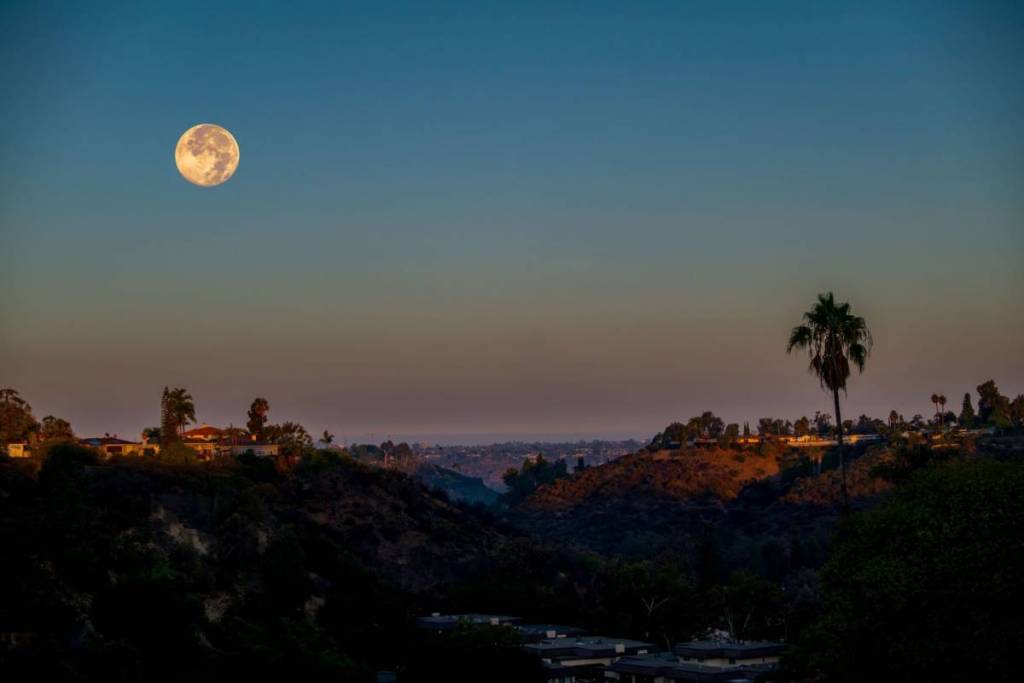

San Diego stargazers, get your cameras and blankets ready – you won’t want to miss this one. The first full moon of the summer, called the Strawberry Moon, is about to grace our skies on Monday, June 29, 2026.
What makes the Strawberry Moon special?
Because this year’s Strawberry Moon falls just a week after the summer solstice, it’s going to be a special event. It will take one of the lowest paths across the sky we’ve seen in decades in the Northern Hemisphere. This low trajectory means the moon will be shining through a thicker layer of Earth’s atmosphere. Expect to see a stunning, golden-amber hue.
Why is it called the Strawberry Moon?

Despite the name, the moon won’t actually look like a bright red strawberry. The name actually originates from the Native American Algonquin tribes. They used the phases of the moon to track the seasons, and this June full moon signaled the time of year to gather the ripening wild strawberries across North America.
In Europe, this moon was often referred to as the Mead Moon or the Honey Moon. This one is more descriptive, referring to the golden, honey-ish color the moon takes on during this time of year.
When’s the best time to catch the full moon?
The Strawberry Moon will officially reach its peak illumination at 4:56 PM (PDT) on Monday, June 29.
However, since the sun will still be up at that time, the absolute best time to watch the moon is right after sunset. As the sun dips below the Pacific in the west, look toward the southeastern horizon. The moon will begin to climb into the sky, looking massive as it peeks above the horizon. Because of its low arc this year, it will stay pretty close to the horizon throughout the night.
Best viewing spots in & around San Diego
To get the best view of the Strawberry Moon rising, you want a location with a clear view of the eastern and southeastern horizon. Here are some of the best spots:
- Cowles Mountain (Mission Trails Regional Park): If you’re up for an evening hike, the summit of Cowles Mountain offers a 360-degree panoramic view of San Diego County. It’s the highest point in the city limits, so an incredible vantage point to watch the celestial event.
- Torrey Pines State Natural Reserve: If you prefer a coastal breeze, Torrey Pines offers elevated cliffs that distance you slightly from the bright city lights.
- Anza-Borrego Desert State Park: For the dedicated skywatchers, this internationally recognized “Dark Sky Park” is about a 2-hour drive from the coast. And yes, it’s worth it. The flat desert landscape provides a perfectly unobstructed view of the eastern horizon. You’ll catch the moon the very second it rises.
- Local east-facing beaches or bays: Shelter Island, Harbor Island, or even the eastern shores of Mission Bay offer great, easily accessible views.
Wherever you end up, head out a bit early to claim a good spot, and enjoy one of the most beautiful lunar events of 2026!